

Indy Lonnie
Well-Known Member

- Indy Lonnie Well-Known Member
Want to give a shout out to JSATX for his work on this…
 www.dfkitcar.com
I wanted to run with this and work on the pedal effort with increasing the pedal ratio.
Proof of concept…
Calculating the Right Brake Pedal Ratio
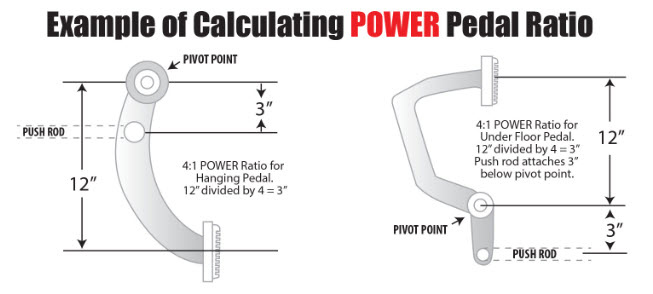
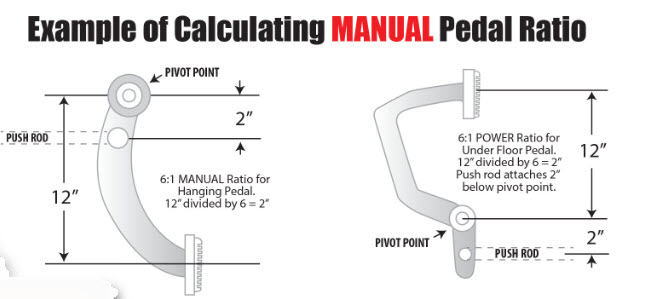
How to Calculate & Adjust
Goblin pedal ratio is approx: ~4:1, 10”. - 2 1/2”
Exact: 9.375 / 2.43 = 3.8 (center of pedal)
10.0 / 2.42 = 4.132 (bottom of pedal)
Optimal 1:6 = 1.56” (9.375/1.56= 1:6 ratio)
For correct alignment of the master cylinder to pedal pivot, the master cylinder mounting holes needs to go up 7/8”. (2.43-1.56 = 0.87 (7/8”))
Time to get to work:
Scribed different pedal ratios, cut pedal box at silver line to get access to drill.
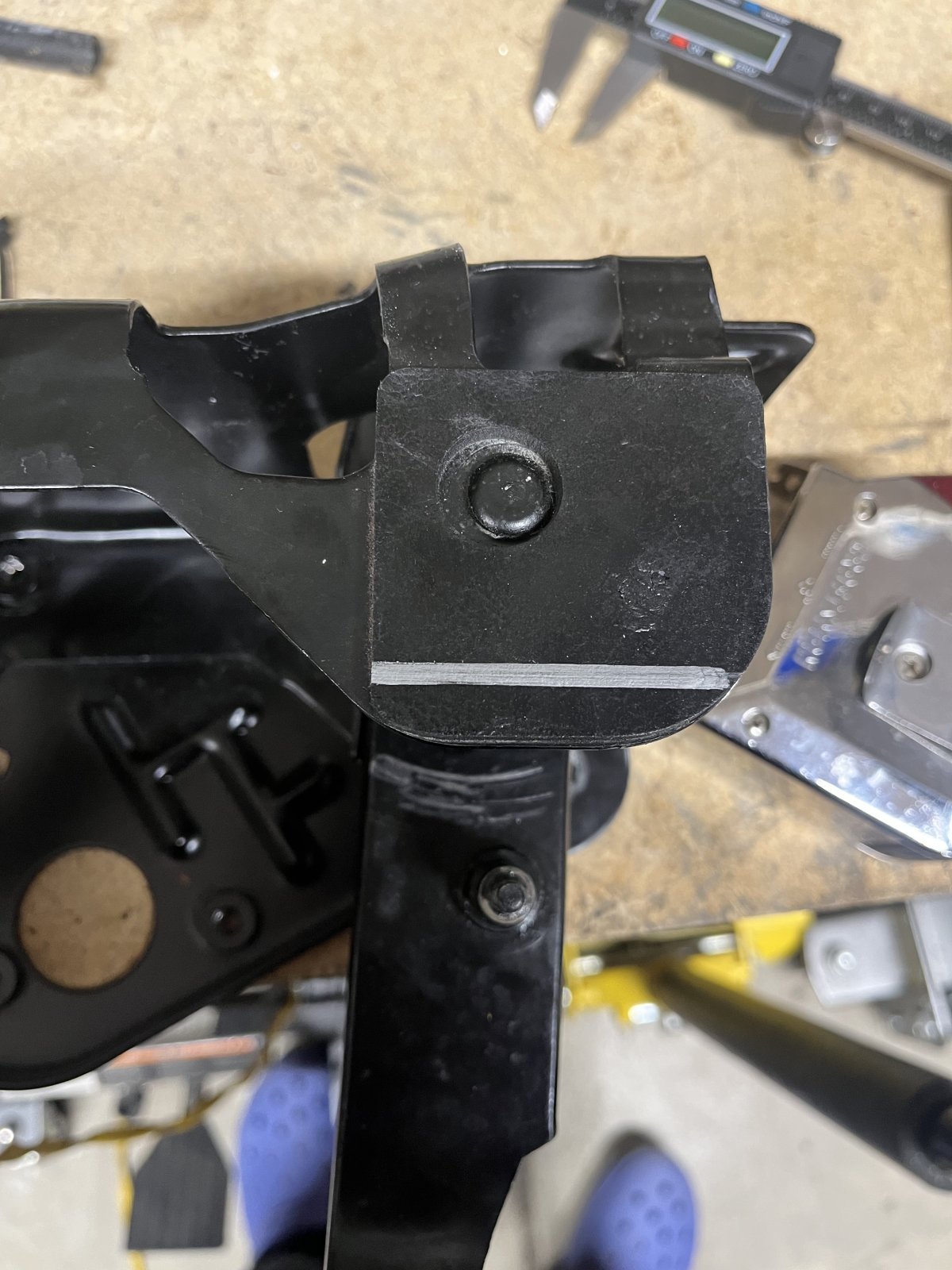
Moved mounting holes up 3/4”, clearanced for master cylinder and remove old mounting lugs.

Seeing what I had to work with, I final drilled hole @5.63 pedal ratio. Original mounting bolt removed.
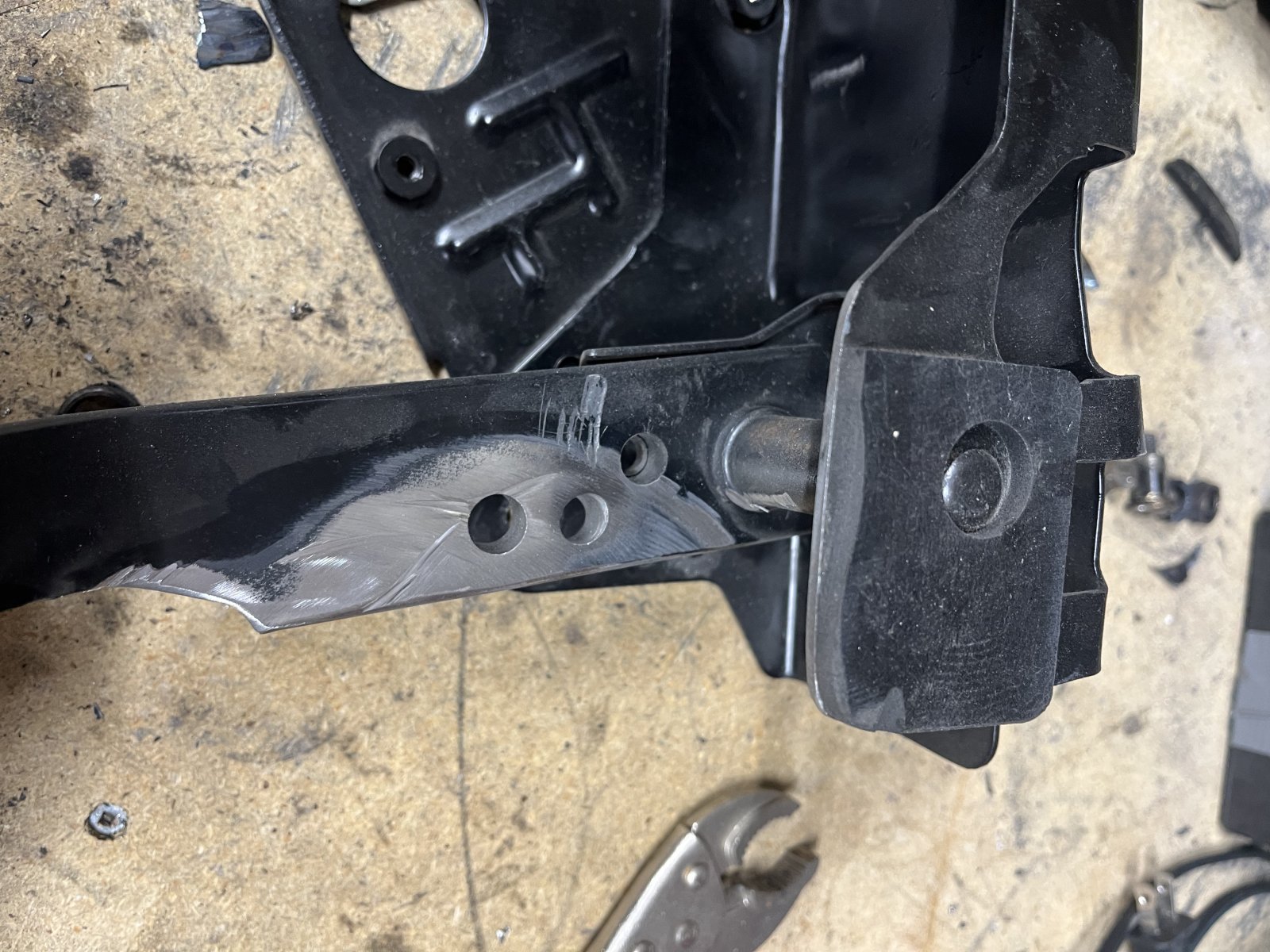
Pedal pivot hardware. Used grade 8 - 3/8 x 1 1/2” bolt

It’s REALLY tight in there. Cut down master cylinder push bolt.
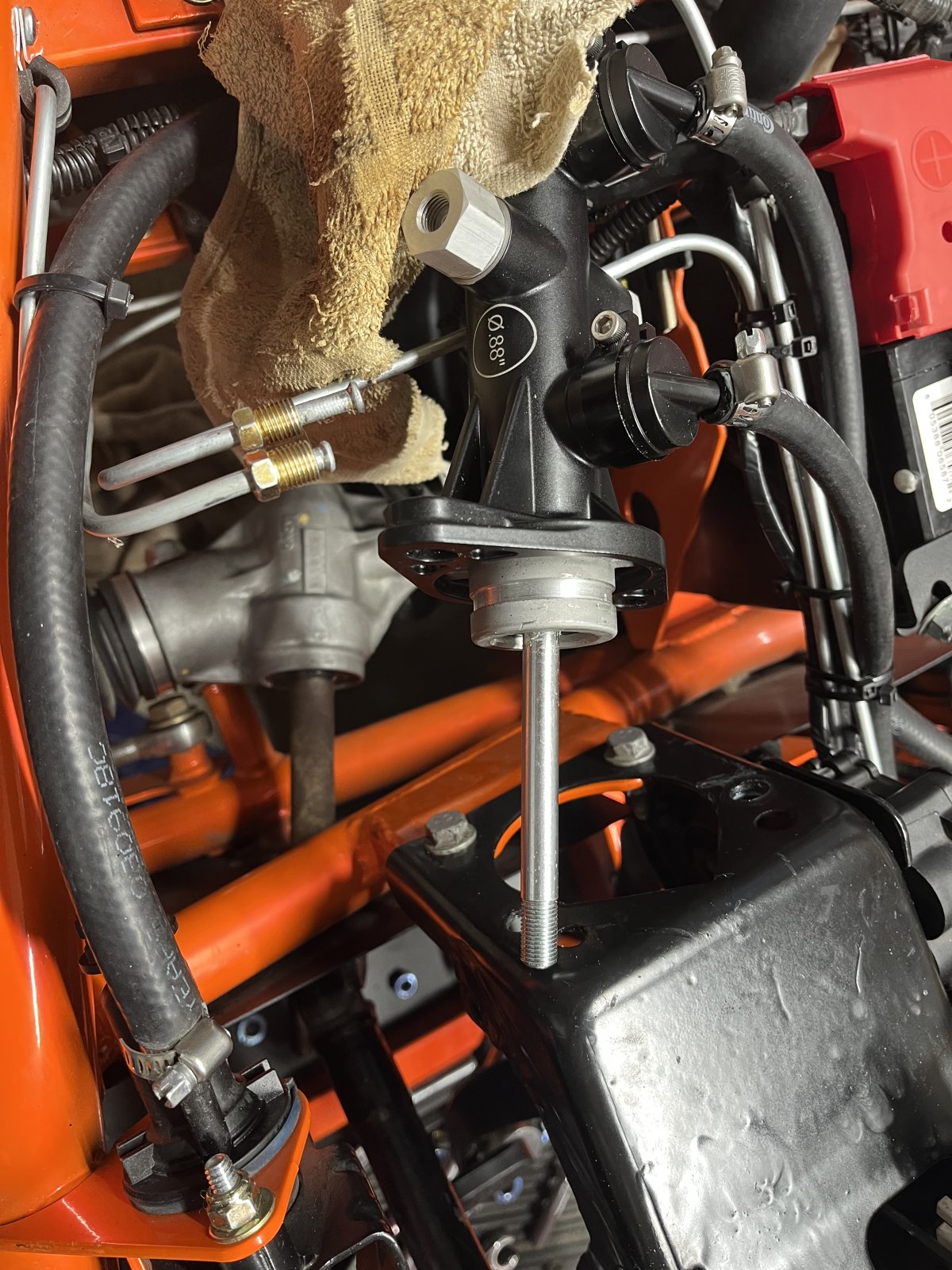
Used a shim and clamp to set where the brake lights activated for cutting lengths.
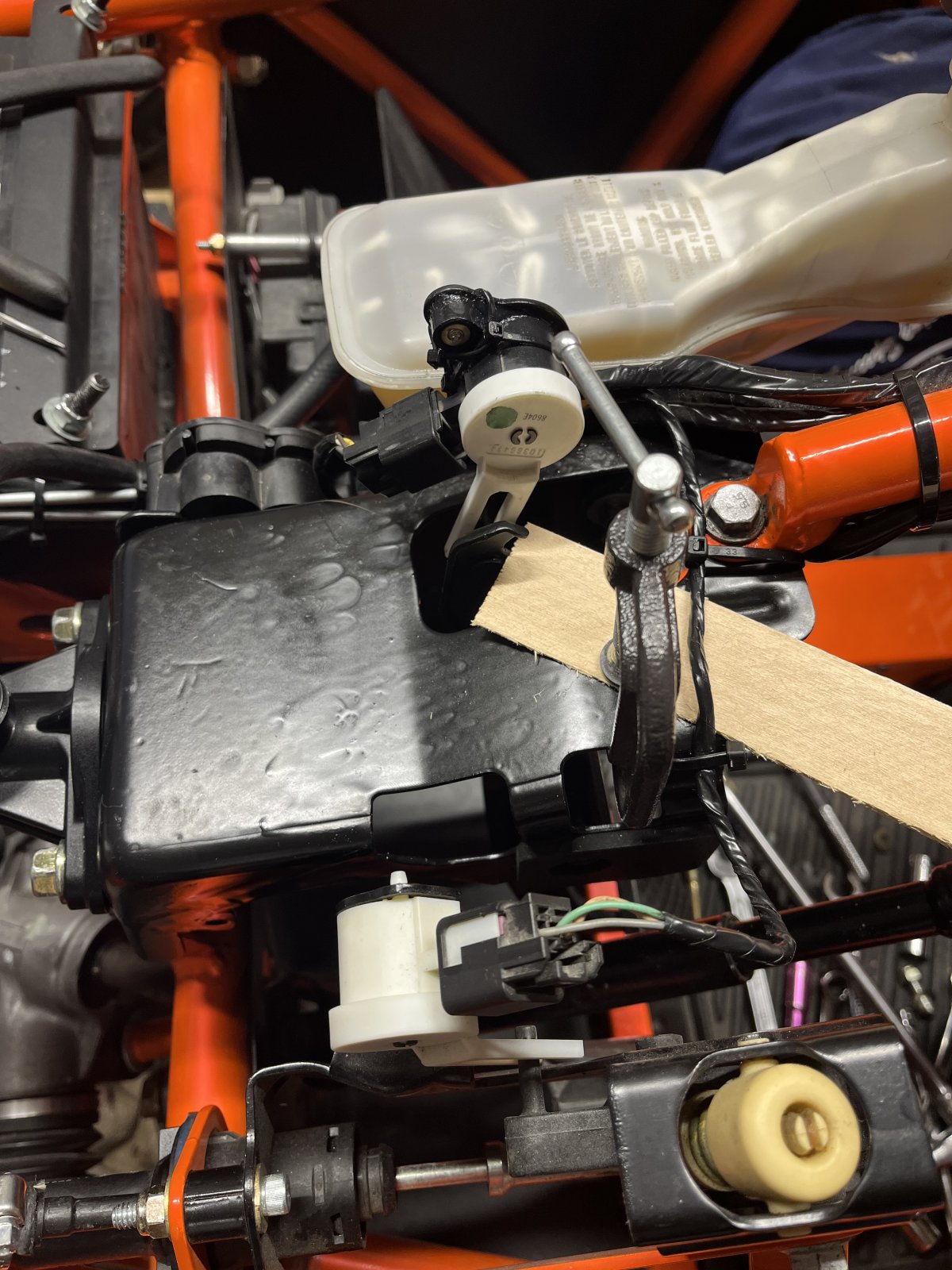
Had to cut down threaded rod between master cylinder bolt and rod end. Shimmed pedal bolt with fat washer to get alignment correct.
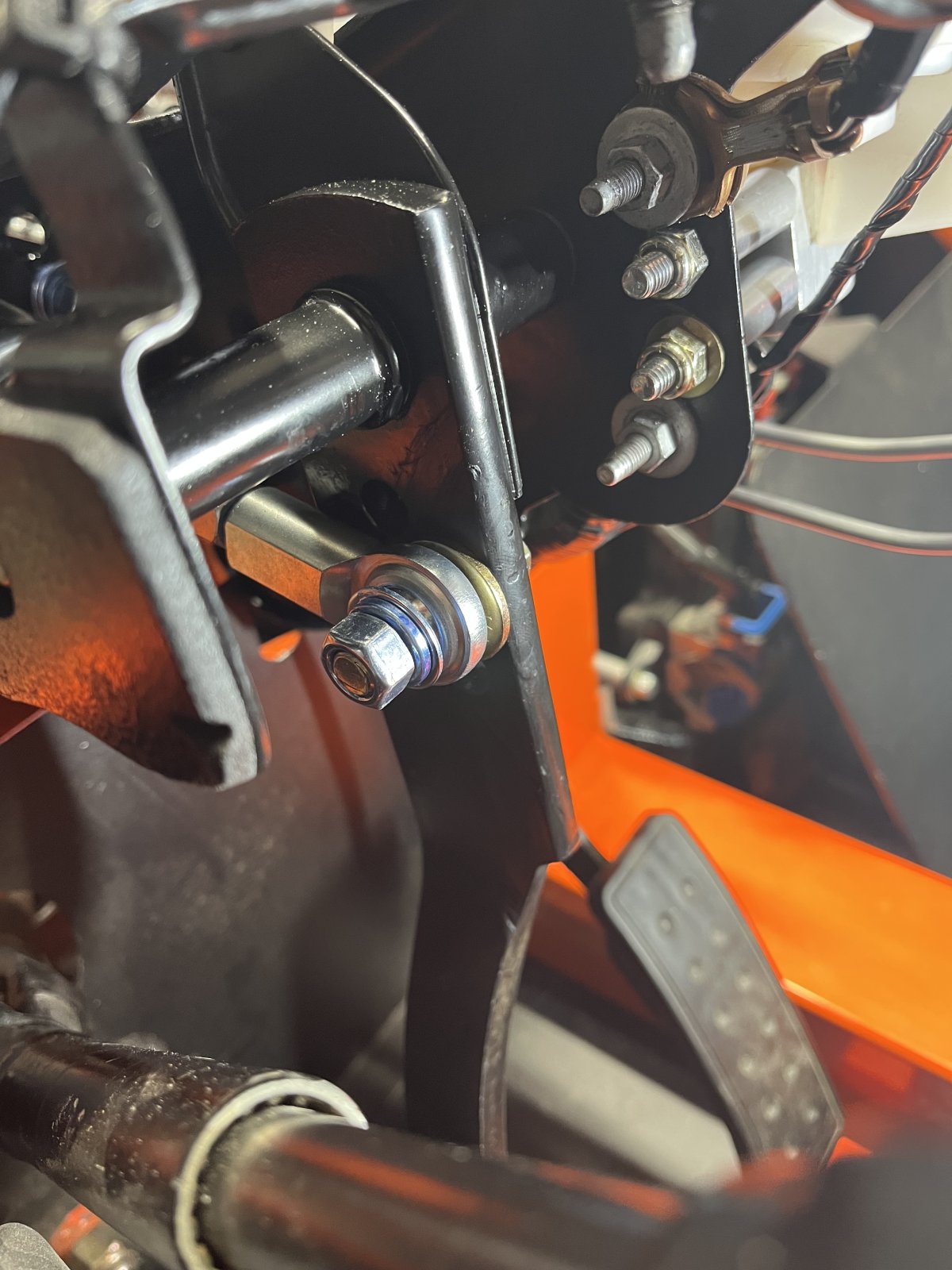
Adjusted bolt combo until wiggle room so master cylinder is not depressed and then brake lights activate. Since there is not a lot or room in there for jam nuts, I used blue locktite on everything.
Here you can see the push bolt assembly extension/rod end if you zoom in. Again - not a lot of room. But it is solid with good thread engagement. It also allows for correct adjustment of brake light switch and push bolt slack.
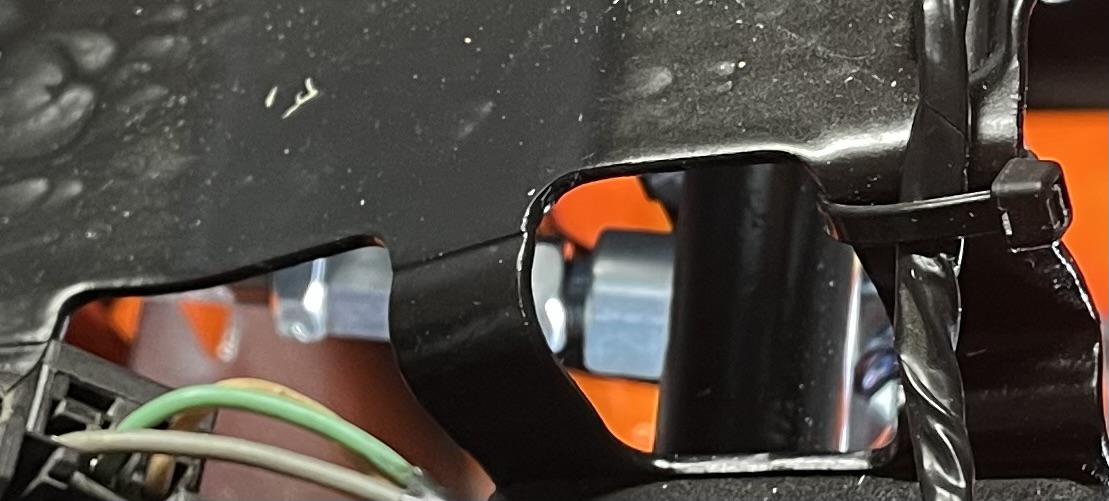
Right now - this is untested since we have 13” of snow on the ground and sub 20* weather.

V1 - Manual brake conversion
I’ve been kicking the idea around of getting rid of the vacuum brake booster for some time. Finally getting around to installing the stainless braided brake lines which replace the 2 rubber GM lines and one intermidiate hard line from DF, and decided that if I was going to drain all the brake...
I wanted to run with this and work on the pedal effort with increasing the pedal ratio.
Proof of concept…
Calculating the Right Brake Pedal Ratio
- Posted by Master Power Brakes
- Manual Brakes: 5:1 to 7:1 (often targeting 6:1 or 7:1 for good feel).
How to Calculate & Adjust
- Measure A: From the center of the pedal pivot to the center of the brake pad.
- Measure B: From the center of the pedal pivot to the pushrod connection point (where it attaches to the master cylinder).
- Calculate Ratio: Divide A by B (e.g., 12 inches / 2 inches = 6:1).
- Adjust: To increase the ratio (for manual brakes), move the pushrod hole closer to the pivot point (decreasing B), or vice versa.
Goblin pedal ratio is approx: ~4:1, 10”. - 2 1/2”
Exact: 9.375 / 2.43 = 3.8 (center of pedal)
10.0 / 2.42 = 4.132 (bottom of pedal)
Optimal 1:6 = 1.56” (9.375/1.56= 1:6 ratio)
For correct alignment of the master cylinder to pedal pivot, the master cylinder mounting holes needs to go up 7/8”. (2.43-1.56 = 0.87 (7/8”))
Time to get to work:
Scribed different pedal ratios, cut pedal box at silver line to get access to drill.
Moved mounting holes up 3/4”, clearanced for master cylinder and remove old mounting lugs.
Seeing what I had to work with, I final drilled hole @5.63 pedal ratio. Original mounting bolt removed.
Pedal pivot hardware. Used grade 8 - 3/8 x 1 1/2” bolt
It’s REALLY tight in there. Cut down master cylinder push bolt.
Used a shim and clamp to set where the brake lights activated for cutting lengths.
Had to cut down threaded rod between master cylinder bolt and rod end. Shimmed pedal bolt with fat washer to get alignment correct.
Adjusted bolt combo until wiggle room so master cylinder is not depressed and then brake lights activate. Since there is not a lot or room in there for jam nuts, I used blue locktite on everything.
Here you can see the push bolt assembly extension/rod end if you zoom in. Again - not a lot of room. But it is solid with good thread engagement. It also allows for correct adjustment of brake light switch and push bolt slack.
Right now - this is untested since we have 13” of snow on the ground and sub 20* weather.
Last edited:


 I thought it was some sort of copy past from master power breaks.


